The Moment Nobody Talks About
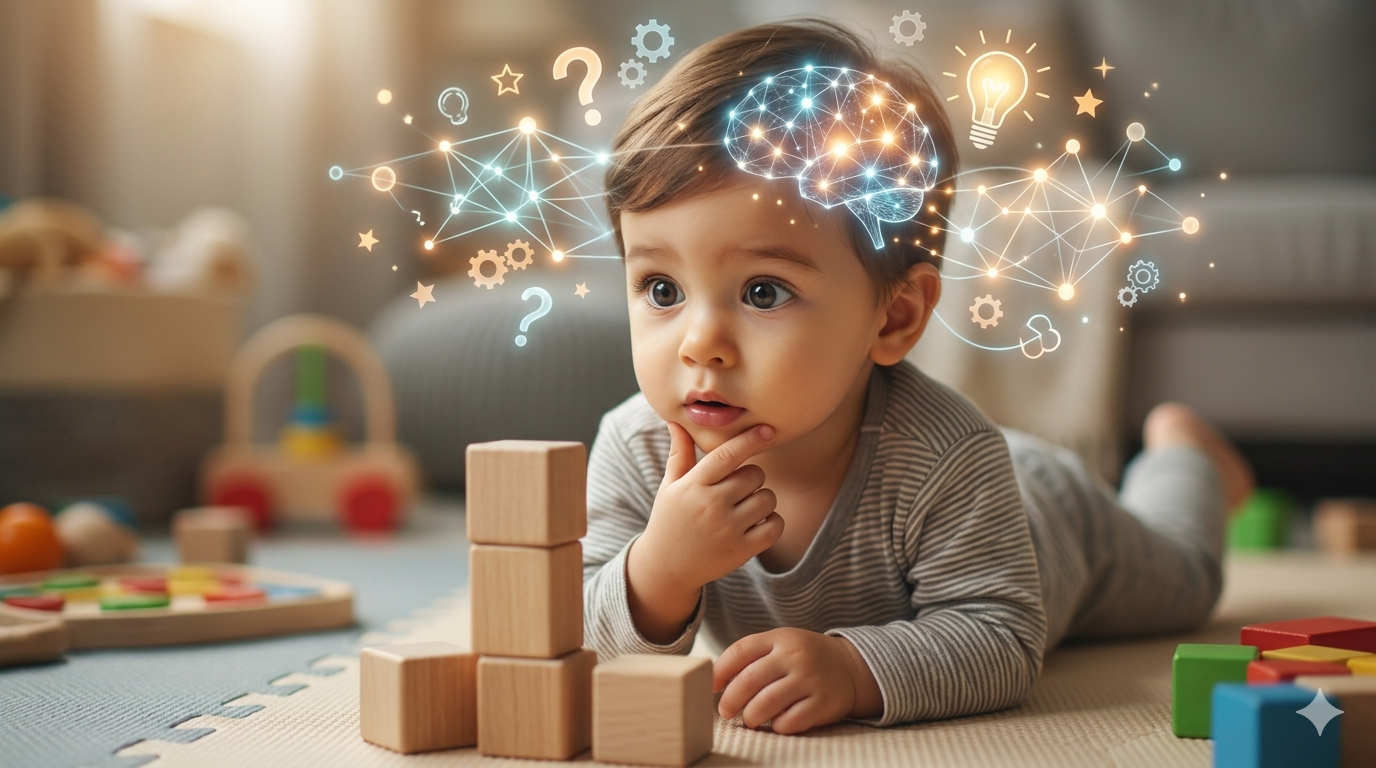
Your child looked at you today. Not through you — at you. For half a second, something shifted behind their eyes. A flicker. A question forming that they didn’t yet have words for. You probably missed it. You were pouring cereal, or checking your phone, or thinking about work.
But in that half-second, something monumental happened. Your child’s mind — that raw, unfiltered consciousness — took one more step toward thinking. Not just reacting. Not just wanting. Actually thinking.
And here’s the question that should keep every parent awake: Were you present for it? Or did you miss the most sacred moment of your child’s day because you were somewhere else?
When was the last time you saw your child’s face change — not with emotion, but with thought? Can you remember what they were thinking about?
Be honest. Most of us can’t.
The Moment Nobody Talks About
You know that children develop. You know about milestones — first word, first step, first day of school. You’ve probably googled “when do babies start talking” at 2 AM.
But nobody talks about the moment a child begins to think. Not babble. Not imitate. Actually form a thought inside their mind — an original, self-generated, intentional thought.
Modern psychology calls this cognitive development. Jean Piaget mapped it into neat stages. Vygotsky studied how language and thought dance together. They measured it, categorised it, published papers about it.
The rishis of Sanatan Dharma saw the same thing — thousands of years earlier. But they didn’t just study thinking. They studied the consciousness underneath thinking. And what they found changes everything about how we should parent.
What’s Actually Happening Inside Your Child’s Mind
Here’s what you need to know — really know, not just have read once — about the architecture of your child’s awakening mind. And as you read, ask yourself: Am I parenting for the stage my child is actually in? Or for the child I wish they were?
The Vedic rishis described human experience as five sheaths unfolding like petals of a lotus. Your child’s thinking doesn’t “turn on” — it unfolds through layers:
The infant lives in pure sensation. They don’t need stimulation — they need warmth, rhythm, and your heartbeat.
The toddler discovers energy and will. An infant’s cry isn’t performance — it’s the raw movement of prana.
THIS is when thinking begins. Imagination, language, wonder. Your child who talks to flowers is perceiving truth the adult mind has filtered out.
Discernment awakens. Right from wrong. Real from imagined. The Upanayana Sanskar was placed here — because the mind is ready.
The deepest layer, closest to the Atman. Babies radiate peace that adults spend decades of meditation trying to recover.
— Taittiriya Upanishad, Brahmananda Valli
Which Kosha is your child living in right now? Are you meeting them there — or pulling them toward a layer they haven’t opened yet?
The Five Stages — And What You’re Probably Getting Wrong
Read each stage and ask: Am I honouring this in my child? Or am I rushing past it?
Birth to 2 — Sensing and Being
Your infant doesn’t need flashcards. They need your skin, your voice, your heartbeat, and your calm. The Charaka Samhita advises maximum physical nurturing because the body-sheath is forming foundational impressions.
Every time you hold your baby while scrolling your phone, you are physically present but energetically absent. They feel the difference.
2 to 5 — The Eruption of Imagination
Your child says the trees are waving hello. Your instinct is to correct them. That instinct is wrong.
In the Bhagavata Purana, rivers have consciousness. Mountains feel. Govardhan accepted Krishna’s hand. The child who animates everything is perceiving a dimension of reality your adult rationality has filtered out.
When your child narrates their play — “I’m making food for my baby!” — they are taking hold of the mind’s reins for the first time. Don’t grab the reins from them.
5 to 7 — The Age of “Why?”
The relentless “Why?” is not your child being difficult. It is Vijnanamaya Kosha — the wisdom sheath — waking up. The rishis placed the Upanayana Sanskar here because the mind is finally ready for structured wisdom.
We meditate upon the sacred light of the divine sun. May it illuminate our intellect. This is the prayer that accompanies a child’s formal entry into the world of disciplined thought.
— Rig Veda 3.62.10
7 to 11 — The Guru Principle
Your child can now think logically. They understand others have different perspectives. This is the traditional age of Gurukula. Are you being their first guru? Or outsourcing their formation to screens and algorithms?
11+ — The Search for Meaning
Your teenager asking “What’s the point of all this?” is echoing Nachiketa in the Katha Upanishad — demanding answers about death and the soul from Yama himself. The Vedic tradition doesn’t pathologise this. It honours it as the soul’s natural movement toward self-knowledge.
Which stage is your child in right now? What is one thing you’ve been doing that belongs to a different stage — either rushing ahead or holding them back?
This is the most important question in this article. Take your time.
So What Do You Actually Do Tomorrow Morning?
This is where most parenting articles end. They give you knowledge and leave you with the same gap you started with. Not here. One practice for each truth:
Your infant needs presence, not stimulation.
For the next 3 days, put your phone in another room for the first and last 20 minutes of your baby’s waking hours. Just be there. Skin to skin. That’s it.
Your child’s imagination is sacred, not silly.
Next time your child says something “impossible” — the moon follows us, the teddy is sad — say: “Tell me more.” Don’t correct. Enter their world. Stay five minutes.
The “Why” stage is the wisdom sheath waking up.
When the 10th “Why?” comes today, instead of answering, ask back: “Why do YOU think?” Then actually listen. You’re teaching them their mind is trustworthy.
Your child needs a Guru — and you’re the first one.
Choose one life skill this week. Tying a knot. Making chai. Folding clothes with care. Sit beside them and do it together. This is Gurukula.
Existential questions deserve existential presence.
When your teenager asks a hard question, resist the clean answer. Say: “I’ve wondered about that too. What do you think?” Then sit in the silence together.
The Sacred Work of Witnessing
The Bhagavata Purana reminds us that Lord Vishnu chose to appear as a child — as Bala Krishna, as Vamana, as the infant on the banyan leaf during Pralaya — not despite but because of the profundity of childhood consciousness.
So the next time your child stares at a raindrop with complete absorption, or asks you whether God can hear a whisper, or insists that their imaginary friend is real — pause. You are witnessing Manomaya Kosha unfolding in real time. You are watching a soul learn to think.
And that, in both psychology and Dharma, is among the most sacred things in the world.
ॐ नमो भगवते वासुदेवाय नमः
Shree (Jaishree Rawat)
Mother, science educator, Vaishnava practitioner. Founder of MindfullyRaised — where ancient Dharmic wisdom meets modern child psychology. Writing for parents who know more than they practise.
Read my full story →📧
Get the 7-Day Mindful Parenting Reset
One question each morning that changes how your day with your child unfolds. Free. No spam.
If this resonated, share it with a parent who needs to read it today.