The awakening child · By Shree, Jaishree Rawat
How children learn through everyday moments.
A question, a gesture, a repeated game: children give us many invitations to notice how they explore the world. We do not have to catch a single perfect moment for connection to matter.
Learning is a process, not a switch
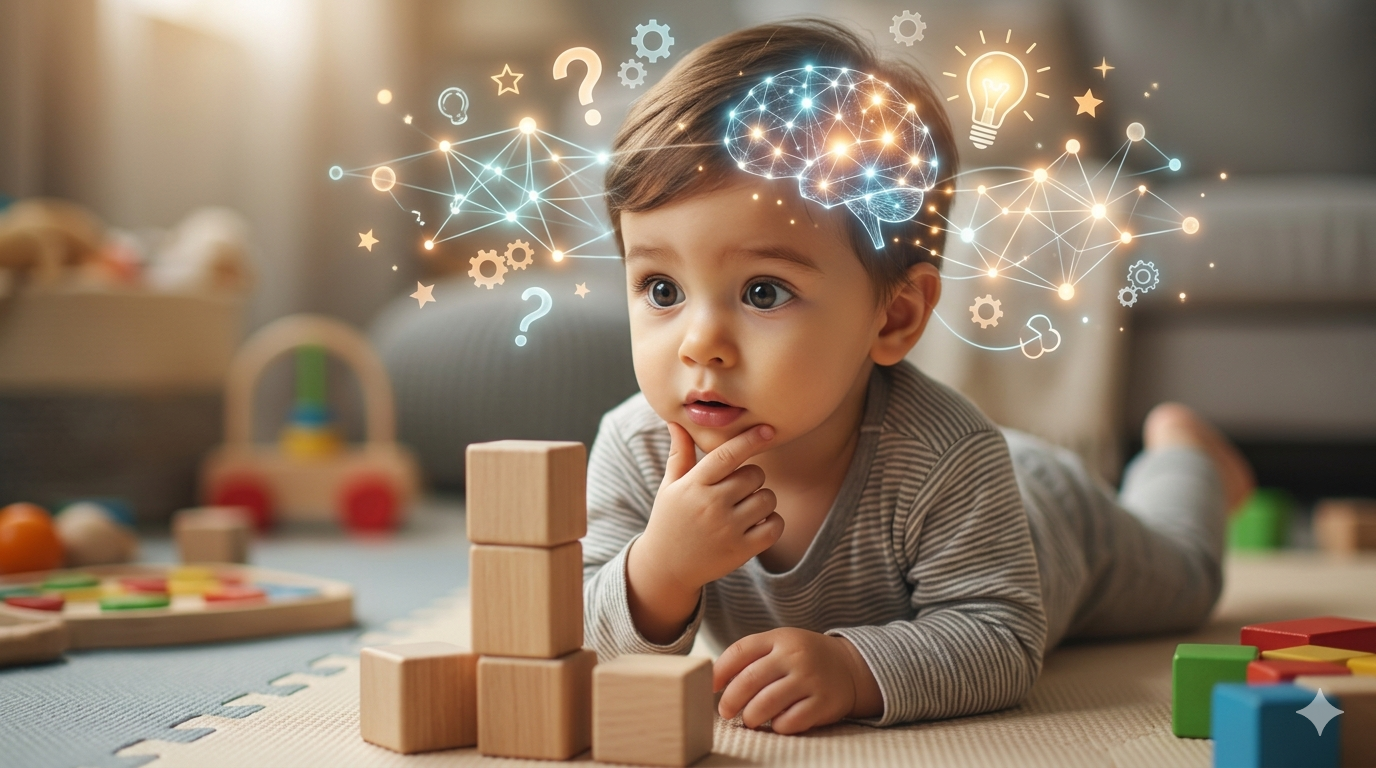
There is no single visible instant when a child’s mind “wakes up”. Children build and use skills through many experiences and interactions. A thoughtful look can make us curious, but it does not tell us exactly what a child is thinking.
As a teacher and mother, I find it more useful to ask, “What has caught this child’s attention?” than to wonder whether I have missed a decisive moment. Ordinary conversation and play give us many opportunities to respond.
What responsive interaction can look like
Harvard’s Center on the Developing Child uses “serve and return” to describe back-and-forth exchanges between a young child and a caring adult. A child may offer a sound, gesture or look; an adult notices and responds. The exchange makes room for another response from the child.
You might name an object a child points towards, copy a playful sound, or pause during a shared book. Follow the child’s communication style and allow breaks. The aim is participation, not performance.
Faith is a lens for meaning
My Sanatani background invites me to approach childhood with reverence and curiosity. Stories, prayer and reflection can help our family discuss care, purpose and responsibility.
Spiritual models such as the koshas may be meaningful for reflection, but I do not assign them scientific age bands or use them to judge a child’s development. A spiritual metaphor and a developmental finding answer different kinds of questions. Respecting both means being clear about which we are using.
Three invitations to try
“Tell me more.”
When your child tells a story or makes something, invite an explanation in words, gestures or pictures. Allow their idea to unfold before adding yours.
“What do you notice?”
Choose something ordinary: a shadow, a leaf or a toy that rolls. Describe it together and compare observations.
“How could we find out?”
With an older child, make a prediction and plan a safe way to explore it. Being willing to revise an explanation is part of learning.
Let imagination and evidence meet kindly
If your child says a tree is waving, you can enjoy the imaginative story. You can also wonder together about the moving branches and the wind. There is no need to shame imagination or present it as scientific fact.
When sharing a religious story, explain what it means within your tradition. When investigating a physical question, ask what you can observe or check. Children can encounter different kinds of explanation without every answer becoming a test.
Make room for different paths
Children have different interests, abilities and support needs. Do not use a quiz, a spiritual model or another child’s progress as a diagnosis. If you have concerns about development, record your observations and discuss them with an appropriately qualified professional.
We do not need to witness every moment. We can return, pay attention and keep learning together.
One small invitation for the week
Choose a prompt from our free seven-day family connection guide. Read it online or print a copy—no signup needed.
Open the free guide →